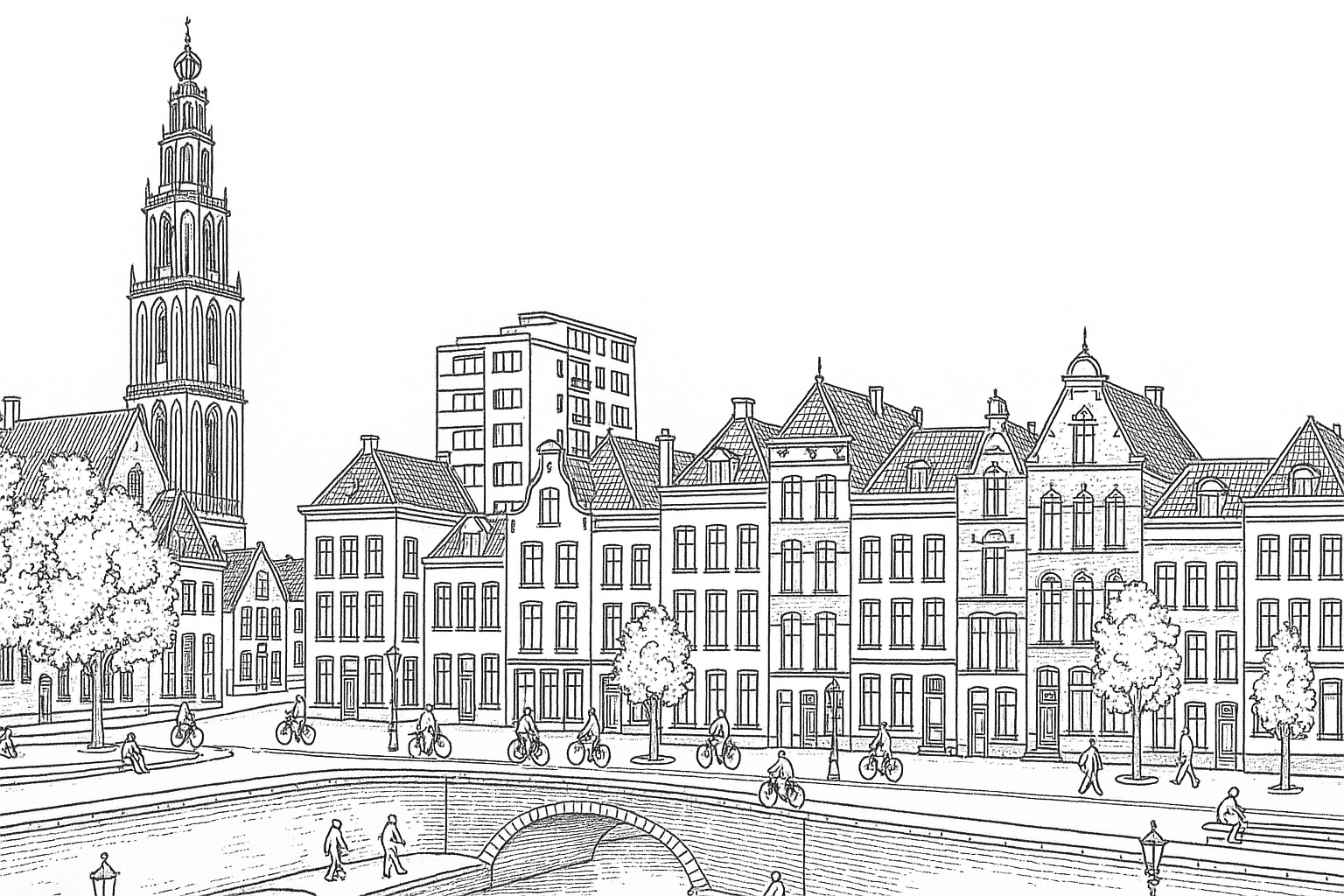
Reconstructing the Netherlands
DraftMy two cents on how we can save this country.
Since I was 14, I started noticing things around me and hearing conversations that made me realize our country is on a path that could lead to failure if nothing changes. That's why I'm writing this: to share my perspective on how we can rebuild the Netherlands and relive the 17th century all over again (figuratively, of course).
Introduction
Let me tell you a bit more about myself. My name is Jeremy Bosma and I am 17 years old as of now. At this point, I'm not entirely sure what my occupation is anymore, but I would describe myself as an artist, an entrepreneur, or both. I mainly work on crafting digital experiences, mostly through code, but I also design. I believe this will help me write this, because I'm always striving to find the best and most efficient solution to any problem.
I grew up in a city in the province of Groningen, where I still reside today. For the first six years of my life, I lived in one place, but then my parents split up. From that point on, I basically had two different lifestyles, two different environments, and two different standards, swapping every two weeks.
On one side, I lived in a middle-class, owner-occupied home, which I don't remember much about, a good thing since it probably means nothing tragic happened there. On the other side, I stayed in a lower-class rental apartment (basically the trenches), where people would climb onto our balcony if the police came to their door, women were audibly abused, one of our rooms was completely covered in mold, drugs were used there, pedophiles lived there, and the elevator was used as a toilet. Someone slept in the garbage cans, and another person set fire to that same garbage can with someone inside. Others jumped off the building onto the cars below. Safe to say, that one's not easy to forget.
Since around 2018 or 2019, both lifestyles have become middle class. Obviously, I'm older now and taking steps to build my own life, which I do through freelancing in software engineering and design, as well as studying software development at a dedicated school.
Why Im Writing This
I know it's probably not an everyday thing: a 17-year-old writing about politics. As a matter of fact, I'm not even all that interested in politics or everything I'm about to talk about. I'm all for common sense, but I also see the urgency and the direction we're heading. With what I'm about to write, I want to show the world that we can do things differently. I've lost faith in the Dutch parliament and our so-called democratic politics, but the only way things can change is if 70% or more of people realize that 90% of what's happening is just complete nonsense and is leading us in the wrong direction.
I will try not to go into the "deep state" or spiritual aspects from a Christian perspective. It's not because I'm unsure about them, but because the sole purpose of this post is to show people what we can do, rather than focusing on what is going wrong or why things might be going wrong on purpose. I think discussing those topics just gives people a reason to label me a "conspiracy theorist" and try to dismiss my entire article because of it. After all, common sense is hard to argue with.
There is a problem
With the current political system, drastically changing the Netherlands is pretty much impossible. People do not get what they vote for. For example, the largest party, PVV, won by a landslide, but because those already in power (not the voters) do not want to form a coalition with the right, at least not if their candidate becomes prime minister, it ended up being someone from another party in this case VVD (not the one with the most votes): Dick Schoof (and funny enough, "Schoof" translates to "shoved", dick shoved). Do whatever you want with that information.
Even if there is an attempt to change something, it takes months or even years to actually make it happen because of all the bureaucratic hurdles it has to go through. The politicans not even chosen most of the time can still turn it down by voting, but those are not the citizens voting.
And as if our own bureaucracy wasn't enough, the European Union regulates the shit out of us too. Every year, more rules and restrictions come from Brussels, making it even harder to actually change anything or do what's best for the Dutch people. If we really want to take back control and make real changes, we need to leave the EU. Only then can we decide for ourselves what makes sense for our country, without being held back by endless European red tape.
So how can this be fixed
To be honest, I don't know exactly how to fix it. I'm heavily inspired by the American system, where they have a president and executive orders, etc., but that system also has its downsides compared to a parliamentary one. Something has to change drastically, but if it does, here is a plan to rebuild the Netherlands.
From a technical perspective, I was also thinking about letting citizens vote directly, instead of having someone vote on their behalf who, most of the time, isn't even chosen by them. This could be done by introducing a system where you log in with DigiD to vote on polls about motions, amendments, or proposed laws.
1. Shift Taxes to Consumption and Resources
We really need to move away from the idea that working and entrepreneurship are things you should punish with high taxes. Why make it harder for the people who keep the economy running and create value? Instead, it makes more sense to tax consumption (especially luxury goods) and the use of natural resources more heavily. Think about CO₂ emissions, pollution, or products that nobody actually needs.
The result? Working and entrepreneurship become more attractive, which leads to more jobs and a stronger economy. Less tax on labor simply means more employment. People keep more of what they earn, companies can grow, and the government still gets its revenue, just from consumption and resources instead of punishing productivity.
2. Extremely Efficient Government
Right now, the government is a sluggish machine full of bureaucracy, unnecessary subsidies, and regulations that nobody really wants. That has to change. By digitizing and using AI smartly, government tasks can be done much cheaper and faster. Anything that doesn't directly contribute to safety, education, health, or infrastructure can be made smaller, more efficient, or even eliminated entirely.
Imagine: less paperwork, fewer civil servants keeping each other busy, and more focus on what actually matters. That saves not just money, but also a lot of frustration.
3. Using Public Wealth
Why should the government only raise money through taxes, when it could also own valuable companies? Think about energy, technology, or infrastructure. The profits from these can be used to fund society. Norway has been doing this for years with their sovereign wealth fund, filled with oil revenues. Why couldn't we do the same with, for example, energy or technology?
But let's take it a step further: the government should own all public transit, grocery stores, and other essential services. It's just much more doable and efficient if these things are run as a service from government to citizen, instead of being left to the market. Common sense, right? That way, everyone gets access to what they need, prices stay fair, and the profits can go back into society instead of into the pockets of a few shareholders.
This way, you build public wealth that can last for generations, instead of having to scrape and cut every year.
4. Stimulate Smart Innovation
The future lies in innovation. By encouraging startups, technology, and exports, the economy grows faster. More growth means more prosperity, which in turn means you need relatively less tax per citizen. It's a flywheel: the more you focus on smart innovation, the easier it becomes to fund the rest of society without everyone being crushed by taxes.
5. Tax Land and Real Estate Smartly (Instead of Labor)
Land and location value can't be moved abroad. If you levy a small tax on that, like a land value tax, you encourage better use of space, without punishing companies or workers. It makes speculation less attractive and ensures land is used where it brings the most value to society.
6. Be More Like China When It Comes to Energy
If you look at how China approaches energy, it's all about pragmatism. They do whatever it takes to keep the lights on, industry running, and the economy growing. They build renewables, sure, but they also use coal, gas, and nuclear, whatever works best for them. We should take a page from their book: focus on affordable, reliable energy first, and ideology second.
7. Reopen the Gas Fields, But Compensate Generously
The Netherlands has massive natural gas reserves, but we've shut them down while the rest of Europe is desperate for energy. Instead of leaving that value in the ground, we should reopen the gas fields. But, and this is important, everyone affected should be compensated richly and fairly. No more endless lawsuits or people left in the cold. Use some of the profits to make sure everyone in Groningen and beyond is taken care of, and the rest can go to public investments.
8. Scrap All Dutch Climate Plans (and Save Billions)
Let's be real: the Dutch climate plans are a drop in the ocean globally, but they cost us tens of billions. If we scrap all these plans, we instantly save at least €28 billion (the estimated cost of the current climate agreement), not to mention all the extra costs for businesses and households. That money can be used for things that actually make a difference for Dutch people, like affordable energy, better infrastructure, or lower taxes. If the rest of the world isn't going to zero emissions tomorrow, why should we bankrupt ourselves trying to lead the way?